Corporate · Guide
UK company formation for business owners and investors
Structure choice, Companies House filing, statutory registers and banking readiness. What founders and advisers should settle before incorporation.
UK company formation means incorporating a legal entity at Companies House so the business can contract, hold assets, employ people and trade with limited liability. The filing is visible on the public register, but banks and counterparties will also look at ownership transparency, governance and how the company sits in a wider group.
This guide walks through how to register a company in the UK, which documents and registers follow incorporation, and typical timelines and fees. It also covers UK company formation for non-residents, where the law matches a domestic setup but banking and tax analysis often don't. It's aimed at business owners, family offices and investors weighing in-house filing against company formation services UK firms provide.
What does UK company formation involve?
Incorporation creates a separate legal person. For most trading and investment holding purposes that means a private company limited by shares. Companies House registers companies in England and Wales, with separate registers for Scotland and Northern Ireland where applicable. Getting the certificate isn't the same as completing tax registration. Once the entity exists, corporation tax and other HMRC registrations need their own process.
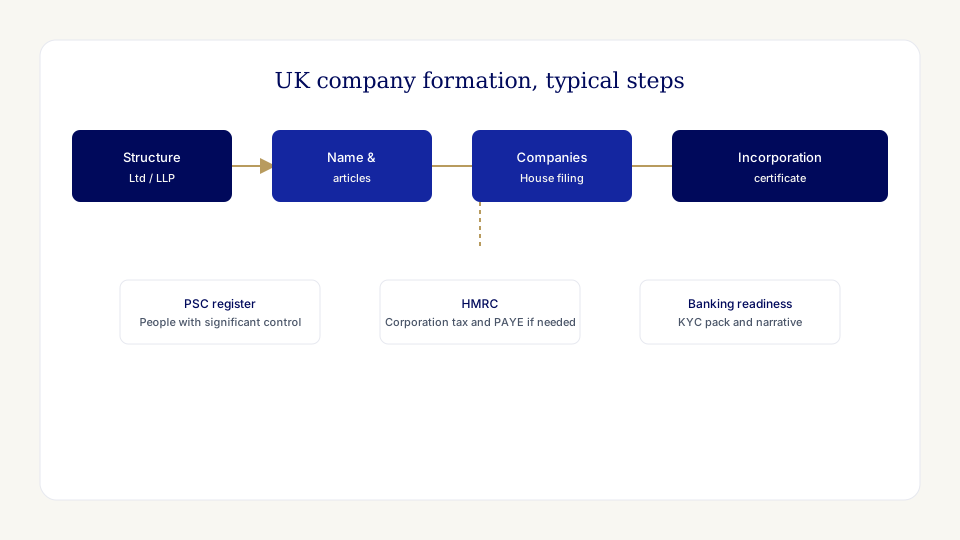
A serious formation project usually covers entity design (share classes, directors, registered office), constitutional documents, the electronic filing, and the first week after incorporation. That means statutory registers, people with significant control (PSC) filings, share certificates, and clarity on who can bind the company.
How do you register a company in the UK?
Most founders register through Companies House WebFiling or approved formation software. The steps below describe a typical private limited company.
Choose the entity type and name
Private companies limited by shares dominate commercial work. LLPs fit some professional structures but are uncommon for general trading. The name must meet Companies House rules and shouldn't infringe existing trade marks.
Check availability on the register before you file. A name Companies House accepts can still cause problems later for banking or if another party asserts prior rights.
Prepare directors, shareholders and the registered office
You need at least one director. Corporate directors face restrictions in many situations. Shareholders may be individuals or corporates, based in the UK or overseas. Every company needs a registered office in its jurisdiction of incorporation (England and Wales, for example). That address is public.
International groups often use a professional Registered Office & Agent service to satisfy the address rule while operations sit elsewhere, as long as statutory mail and notices are handled properly.
Adopt articles and complete the incorporation statement
Companies typically adopt model articles or bespoke articles that reflect shareholder rights, transfer restrictions and board process. Subscribers sign the incorporation documents and confirm compliance with the Companies Act 2006.
The application lists officers, share capital, PSC information and the statement of compliance. PSC mistakes are a common enforcement theme. If ownership runs through overseas entities, you need a clear map to the registrable person or relevant legal entity.
Submit to Companies House and receive the certificate
Online applications usually land within one to two working days when Companies House has no queries. The certificate of incorporation gives you the company number and incorporation date. Hold off on bank accounts, major contracts or further share issues until that point.
What changes for non-resident UK company formation?
UK company formation for non-residents follows the same incorporation statute as for UK-resident founders. Non-resident directors and shareholders are allowed. Where projects stumble is usually banking, tax residence, substance, and proving overseas ownership to AML teams.
Banks often dig deeper when control sits outside the UK, when there's no UK operation, or when the structure stacks offshore layers. A certificate alone rarely opens an account if the narrative, source-of-funds papers and governance files aren't there.
Treat banking readiness as part of formation, not a task for the week after incorporation. The same applies when the UK company will sit under a holding company structure elsewhere.
Tax residence is a separate question. A UK-incorporated company isn't automatically UK tax resident if central management and control happens elsewhere. That's for tax advisers. Corporate service providers implement the structure; they don't replace that advice.
What documents and registers are required after incorporation?
Ongoing Company Secretarial work keeps registers accurate when directors change, shares move or PSC details shift. Due diligence often surfaces gaps here.
- Statutory registers of members, directors and PSCs (unless held on the public register where permitted)
- Minutes appointing directors and allotting shares
- Share certificates and a cap table reflecting legal ownership
- Accounting reference date and plan for first accounts
- Corporation tax registration with HMRC when trading or receiving income
- Data protection registration with the ICO if required for the business activities
Confirmation statements and annual accounts must reach Companies House on time. Late filing brings penalties and erodes trust with lenders and investors.
How long does UK company formation take?
Electronic incorporation often finishes within 24 to 48 hours. Name queries, thin PSC detail or bespoke articles that need manual review slow things down. Shareholder agreements, group charts and bank KYC packs routinely take longer than the registry.
If you'll employ staff, register for PAYE before the first payroll run. VAT registration comes into play as turnover nears the threshold or if you elect to register early. None of that is part of the Companies House form, but it affects when you can trade with confidence.
What does UK company formation cost?
Companies House charges a statutory fee for electronic incorporation. Fees change, so check the current schedule before you pay. Professional company formation services UK providers usually quote for structure advice, registered office, document packs, registers and first-year compliance.
Low-cost incorporation-only products often skip governance setup, PSC mapping for layered ownership and banking documentation. For cross-border groups, adviser time to align tax, legal and banking frequently costs more than the registry fee.
You'll also carry annual confirmation statements, registered office renewal, accounts and corporation tax compliance. A dormant company is cheaper, but it still has filings.
Common pitfalls in UK company formation
Treating incorporation as the finish line
The certificate creates the entity. It doesn't convince a bank or regulator that the business is real. Teams that file first and design substance later often restructure at greater expense.
Weak or incomplete PSC disclosures
PSC rules force transparency on who controls or owns significant shares. Trust or foundation ownership offshore still has to be traced to registrable persons. Errors mean rejections or correction filings later.
Mismatched articles and shareholder expectations
Model articles may omit drag-along rights, dividend classes or reserved matters your shareholders' agreement assumes. Align the constitution with the commercial deal before you issue shares to investors or family members.
Ignoring the UK regulatory perimeter
Some activities, including parts of financial services, need FCA authorisation or a valid exemption. Formation doesn't grant a licence. STEP and similar bodies govern trust and estate advisers; a formation agent isn't a substitute for regulated legal or tax counsel.
What company formation services UK providers typically do
Licensed TCSPs and accountancy firms offering company formation services UK usually handle incorporation, registered office, registers, template documents and ongoing filing support. Many clients want one team to form the company and maintain the statutory records alongside tax advisers.
Finstow's Company Formation & Structuring work targets internationally active clients who need incorporation tied to group architecture rather than a standalone shelf company.
When you compare providers, ask whether PSC mapping is included, how banking packs are built, who approves filings, and how handover works with in-house teams or external lawyers on cross-border files.
Where Finstow fits
Finstow handles UK company formation inside broader corporate services for owners, investors and family offices working across borders. Engagements usually cover incorporation, registers, accounting readiness and coordination with tax and legal advisers rather than a single registry submission.
- Company Formation & StructuringIncorporation, share structures, group design and implementation with ongoing corporate administration.
- Registered Office & AgentRegistered office address, statutory mail handling and agent services for UK entities.
- Company SecretarialRegisters, filings, director and shareholder changes, and Companies House compliance.
Frequently asked questions
- How long does it take to form a company in the UK?
- Most online applications to Companies House clear within one to two working days if the name and PSC details pass review. Objections to the name, complex articles or incomplete PSC information can delay approval. Banking and tax setup usually run longer than incorporation itself.
- Can a non-UK resident form a UK company?
- Yes. Non-resident individuals and overseas companies can be directors and shareholders of a UK private company, subject to director eligibility rules. You still need a UK registered office, and banks may ask for extra KYC where control is abroad.
- How much does UK company formation cost?
- You pay the Companies House fee plus any professional charges for structure advice, registered office, registers and compliance. Registry fees change, so verify the current amount before filing. Complex ownership, bespoke articles and international banking prep push the total up.
- Do you need a UK address to register a company?
- Every UK company must have a registered office in its jurisdiction of incorporation. Directors and shareholders don't have to live in the UK, but the registered office must be a real address for statutory documents. Directors may use a separate service address.
- What is the difference between incorporation and HMRC registration?
- Companies House incorporation creates the legal entity. HMRC registration covers corporation tax and, where needed, PAYE and VAT. A new company isn't automatically enrolled for every tax regime. Trading and payroll drive what you register and when.
Related pages
- ACSP Identity VerificationCompanies House verification for directors and PSCs through Authorised Corporate Service Providers.
- Banking ReadinessDocumentation, narrative and KYC preparation before and after incorporation.
- Holding Company StructuresParent companies, group architecture and jurisdiction choice explained.